Understanding Habitat Management: A Landowner's Guide to Improving Wildlife Populations
Expert strategies, funding insights, and practical steps to help your land support healthier deer, turkey, and quail.
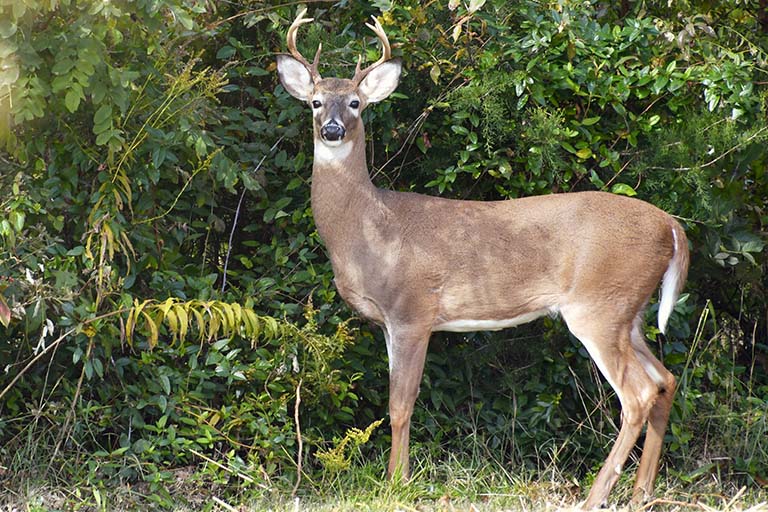
Turn Your Land Into a Wildlife Asset
Your property holds far more potential than you may realize. With the right habitat management plan, you can grow healthier deer herds, improve turkey nesting success, rebuild quail populations, and qualify for conservation funding that can cover much of the cost.
What Is Habitat Management?
Habitat management is the intentional process of evaluating, planning, and improving land to support healthy, sustainable wildlife populations. For private landowners across the I-20 corridor, including Louisiana, Texas, Arkansas, Mississippi, and Oklahoma, it is one of the most effective ways to increase hunting success, improve recreational value, and protect long-term property health.
From pine plantations and hardwood bottoms to pastureland and wetlands, every acre on your property influences how deer, turkey, and quail feed, nest, and reproduce. Without active management, even the best properties decline. Understories grow too dense, invasive species take over, and nesting cover disappears.
At Nexus Land & Timber Solutions, we help landowners reverse that trend. Through science-based habitat planning and conservation funding programs, we have helped secure over $1.4 million for private landowners to restore and improve wildlife habitat, including:
- Prescribed burning
- Food plot installation
- Forest stand improvement
- Native grass restoration
- Wetland enhancement
Habitat management is not guesswork. It is a strategic process grounded in wildlife biology, forestry, and ecology, designed to produce measurable results.
Why Habitat Management Matters in the I-20 Corridor
The I-20 corridor sits at the intersection of coastal marshes, bottomland hardwoods, pine uplands, and prairie remnants. These ecosystems once supported abundant wildlife, but decades of fire suppression, land conversion, and fragmented management have reduced habitat quality across much of the region.
Effective habitat management delivers real, lasting benefits:
- Higher deer carrying capacity
- Stronger turkey nesting success
- Improved quail brood survival
- Increased property value
- Better hunting and recreation
Well-managed land also becomes eligible for federal and state conservation programs that help offset improvement costs, making good stewardship a smart financial investment.
Assessing Your Land for Wildlife Success
Every successful habitat management plan starts with a detailed property-level assessment. No two tracts are alike, and the right strategy depends on how your land functions today.
A professional habitat assessment evaluates:
Soils and Hydrology
Soil type, drainage, and moisture determine what plants can thrive, from upland forage to bottomland browse.
Cover and Structure
Wildlife depends on structure, including:
- Open understories for deer movement
- Shrub cover for quail
- Roost trees for turkeys
- Edge habitat between forest and field
Overgrown or overly dense stands limit feeding, nesting, and movement.
Current Wildlife Use
Tracks, droppings, browse lines, nesting activity, and trail camera data reveal how animals are using your land right now.
Proven Strategies to Improve Wildlife Habitat
Effective habitat management creates the right balance of food, cover, and space in the right places.
Deer Habitat Management
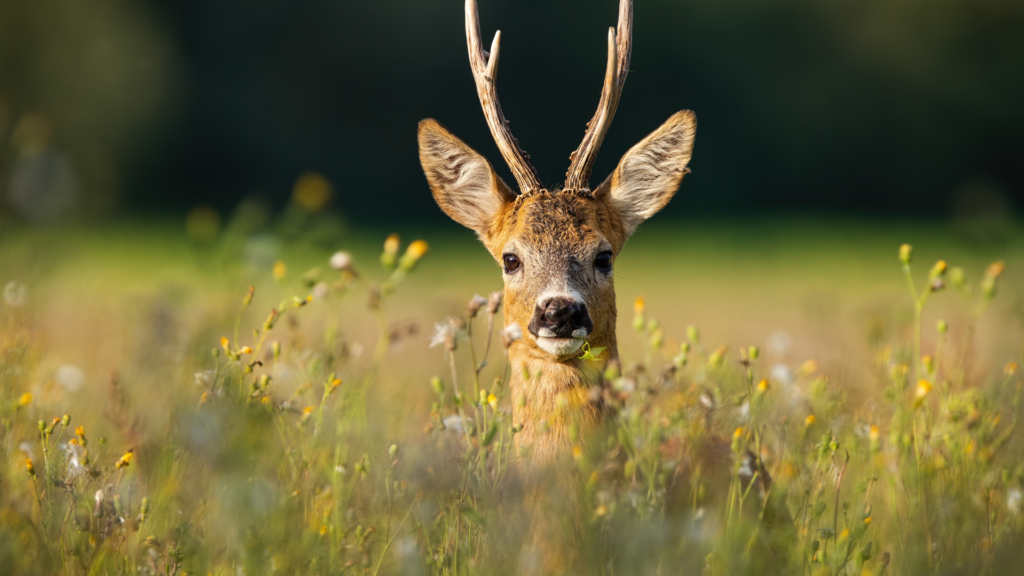
White-tailed deer are browsers that need diverse, accessible nutrition year-round combined with adequate cover for security. Key management practices include:
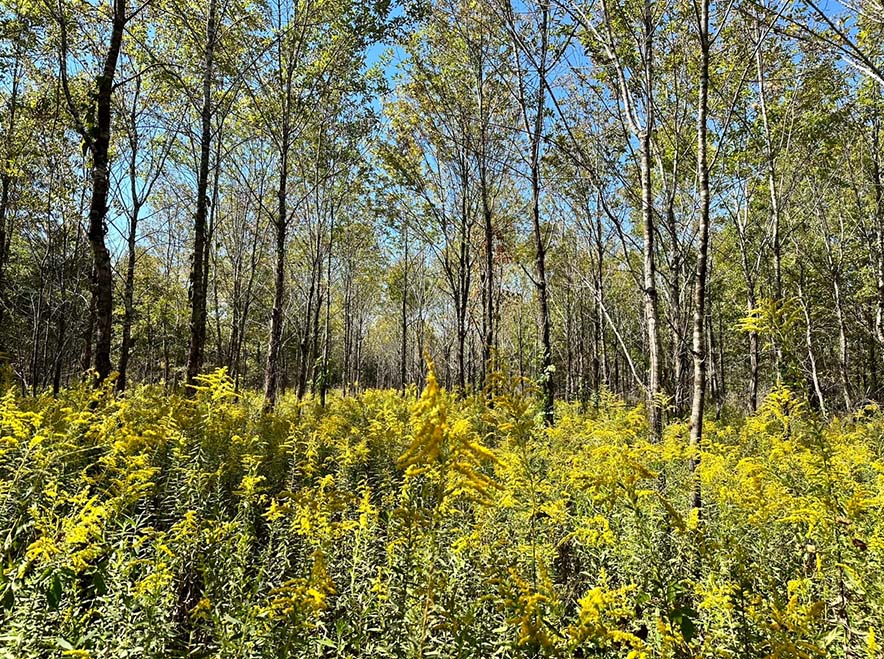
- Forest stand improvement: Selective thinning opens the canopy and stimulates understory growth, dramatically increasing native browse species like greenbriar, honeysuckle, and forbs. This is often the highest-impact practice for deer nutrition.
- Food plots: Warm-season plots with soybeans, cowpeas, and lablab provide protein during antler development. Cool-season plots with clover, wheat, and brassicas carry deer through winter when natural browse is limited.
- Mast management: Properties with diverse oak species provide more consistent acorn crops. Timber stand improvement that favors mast-producing trees over less valuable species increases the food value of your forest.
- Water sources: Reliable water becomes critical during summer droughts. Properties with creeks, ponds, or constructed water sources hold deer better than dry tracts.
- Cover and bedding: The ideal property provides dense thickets for security and bedding alongside more open timber for travel and foraging.
Turkey Habitat Management
Wild turkeys require different habitat conditions throughout the year. Successful management addresses nesting, brood-rearing, and roosting needs:
- Nesting cover: Hens need areas with moderate grass and forb height (12 to 24 inches) that provides concealment while allowing visibility and escape. Field edges, woodland openings, and native warm-season grasses provide excellent nesting habitat.
- Brood-rearing habitat: Turkey poults depend on insects for protein during their first weeks. Open, herbaceous areas with diverse forbs and bare ground patches allow poults to move freely while finding food. Poults struggle in dense, matted vegetation.
- Roost trees: Turkeys roost in trees every night. Ideal roost trees are mature hardwoods or pines with large, horizontal limbs near water. Timber management plans should protect quality roost trees.
- Open woodland structure: Turkeys thrive in open, park-like timber with good visibility. Dense understory limits their movement and makes them vulnerable to predators.
- Prescribed fire: Regular burning on a two to three year rotation maintains open conditions, stimulates insect-attracting forb growth, and controls woody encroachment. This is the single most effective tool for turkey habitat in the Southeast.
Quail Habitat Management
Northern bobwhite quail have declined more than 80 percent over the past 50 years, primarily due to habitat loss. Quail respond quickly to proper management when landowners commit to restoring early successional habitat:
- Native warm-season grasses: Little bluestem, indiangrass, and switchgrass grow in clumps with bare ground between plants, allowing chicks to move freely while finding insects. Converting fescue to native grasses is one of the highest-impact improvements for quail.
- Bare ground and structure: Quality quail habitat includes approximately 30 to 40 percent bare ground, 30 to 40 percent herbaceous cover, and 20 to 30 percent woody cover. This mix provides mobility, food, and escape cover.
- Native forbs and food sources: Ragweed, partridge pea, and native legumes provide seeds for adults and attract insects for chicks. Annual disking of field edges stimulates these plants.
- Covey headquarters: Quail need dense, woody thickets for escape cover from predators. Plum thickets, shrubby draws, brushpiles, or half-cut trees provide critical refuge areas.
- Prescribed burning and disking: Burning on a two to three year rotation combined with strip disking creates the mosaic of habitat types quail need. Regular disturbance is essential for maintaining early successional conditions.
Conservation Funding Programs for Landowners
Most landowners are surprised to learn they rarely pay full price for habitat improvements.
Programs include:
- Environmental Quality Incentive Program (EQIP)
- Conservation Stewardship Program (CSP)
- Working Lands for Wildlife
- CRP
- ACEP
- State wildlife agency and NGO partnerships
These programs often cover 50 to 90 percent of improvement costs.
Nexus Land & Timber Solutions has helped landowners secure over $1.4 million in conservation funding.
Who Qualifies?
Many landowners qualify if they:
- Own or control the land
- Meet income eligibility limits
- Develop a conservation plan
Nexus handles the planning and paperwork so you do not have to.
What Funding Can Cover
EQIP and similar programs commonly fund:
- Forest thinning
- Firebreaks
- Fencing
- Tree and shrub planting
- Wildlife openings
Nexus estimates funding potential before any project begins so there are no surprises.
Your Land Has More Potential Than You Think
Habitat management is one of the smartest investments you can make for wildlife, for hunting, and for the long-term value of your land.
Nexus Land & Timber Solutions brings the science, funding access, and regional expertise to help you do it right. Serving landowners across Louisiana, Texas, Arkansas, Mississippi, and Oklahoma.
Frequently Asked Questions
Can I enroll only part of my land?
Yes. Most programs allow partial-property enrollment.
How long do contracts last?
Typically 3 to 10 years.
Are state programs available?
Yes. State wildlife agency programs and nonprofit grants can often be layered on top of federal funding.
How long does it take to see results from habitat management?
Some improvements show results within months. Deer respond quickly to food plots and forest thinning. Turkey and quail populations typically take two to three years to respond measurably.
Do I need to choose between timber production and wildlife?
No. Properly managed timber operations often improve wildlife habitat. Integrated management maximizes both objectives.