Forest Stand Improvement for Wildlife Habitat
Targeted forest stand improvement practices that enhance wildlife habitat, promote healthy forest growth, and improve the ecological value of your property.
Forest Stand Improvement for Wildlife
Targeted Practices to Enhance Habitat, Biodiversity & Land Aesthetics
Forest Stand Improvement (FSI) focuses on intentionally manipulating specific stand characteristics to achieve defined objectives: most commonly improving wildlife habitat, ecosystem balance, and overall forest aesthetics. While FSI is not always driven by timber production, it makes a real difference in long-term land stewardship and habitat sustainability.
Nexus Land & Timber Solutions provides professional silvicultural practices s to enhance habitat conditions for a wide range of wildlife species while additionally supporting broader forest health and management goals.
What Is Forest Stand Improvement (FSI)?
Forest Stand Improvement involves modifying forest structure, species composition, or understory conditions to achieve a specific outcome. In wildlife-focused applications, FSI is used to:
- Increase food availability and cover
- Improve nesting, brood-rearing, or travel corridors
- Promote plant diversity and native species regeneration
- Reduce forest health risks caused by overcrowding or invasive species
- Enhance visual and recreational value of timberlands
FSI practices are most effective when guided by clear objectives and integrated into a broader management strategy.
Related Service: Forest Management Planning
Forest Stand Improvement Practices We Implement
We have extensive experience implementing a range of FSI techniques, tailored to property conditions, target species, and landowner goals.
Thinning & Stand Density Management
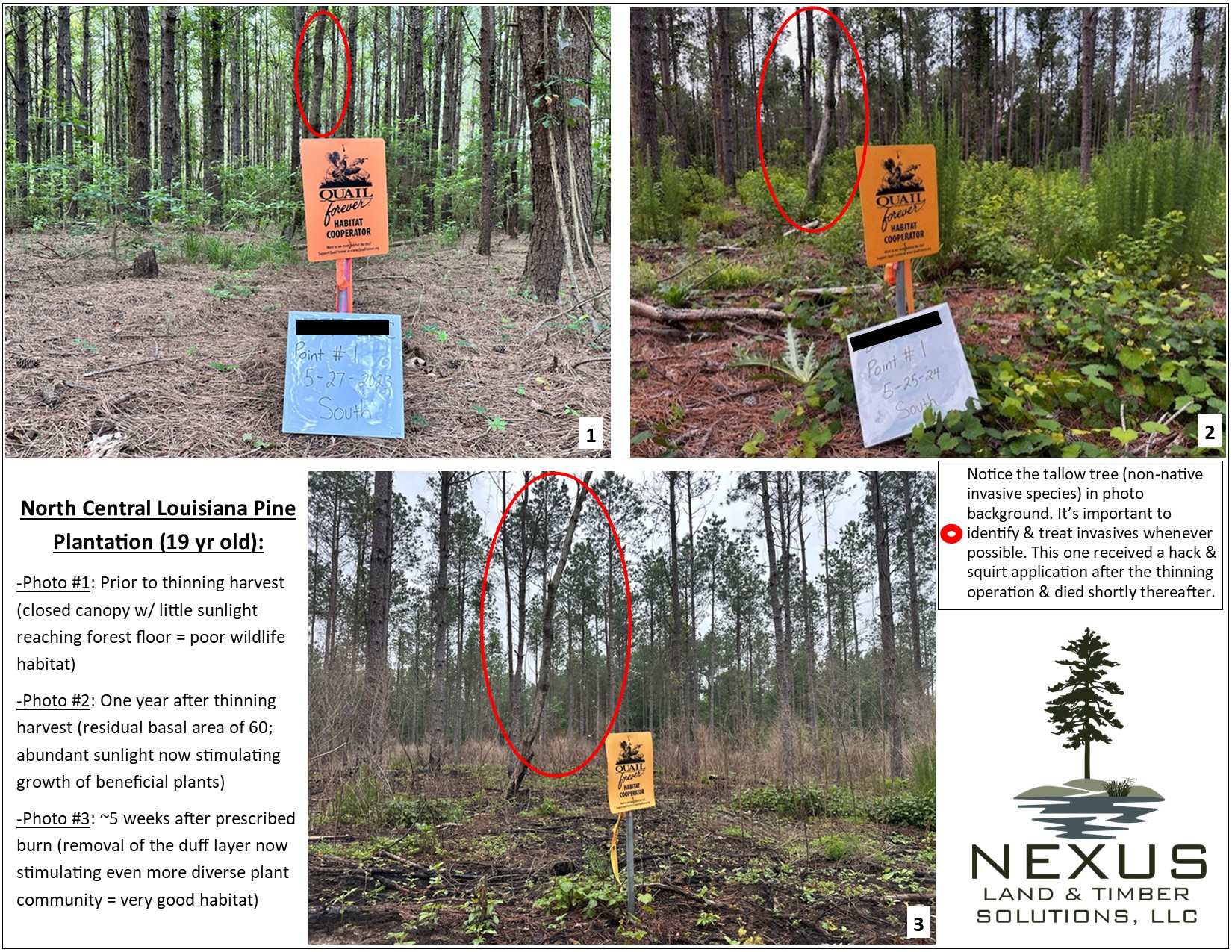
Selective thinning reduces competition among trees, allowing sunlight to reach the forest floor and encouraging the growth of grasses, forbs, and browse species critical for wildlife.
This practice also supports:
- Improved forest health and resilience
- Better habitat structure for game and non-game species
- Creating edge habitat
- Retaining mast-producing trees
- Managing understory density
Related Service: Forest Health & Monitoring
Prescribed Fire
Prescribed burning is one of the most effective tools for improving wildlife habitat, particularly in fire-adapted ecosystems.
Benefits include:
- Stimulating native plant regeneration
- Controlling woody encroachment
- Improving forage quality for wildlife
Prescribed fire recommendations are developed with safety, regulatory compliance, and ecological outcomes in mind.
Related Service: Other Silvicultural Practices
External reference: US Forest Service – Prescribed Fire Benefits
Herbicide Treatments & Vegetation Control
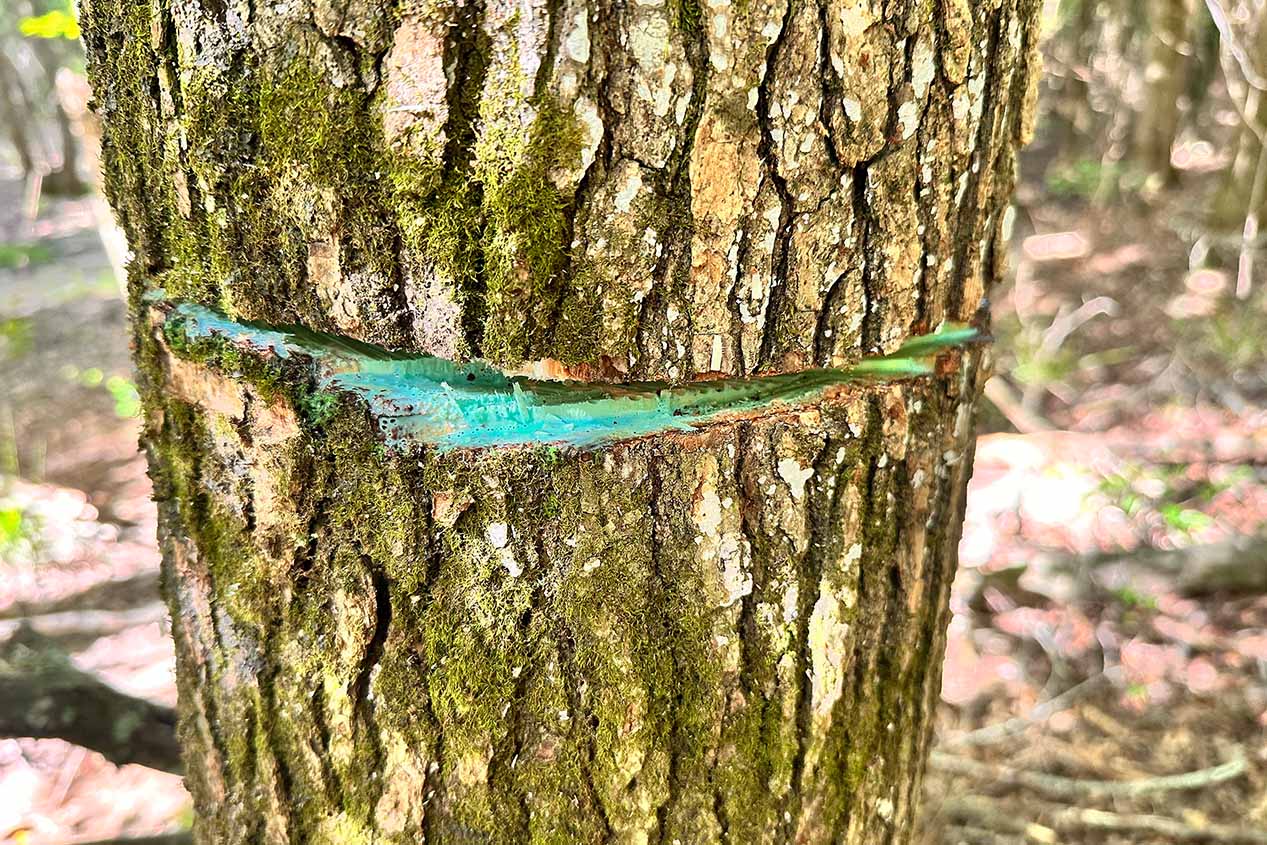
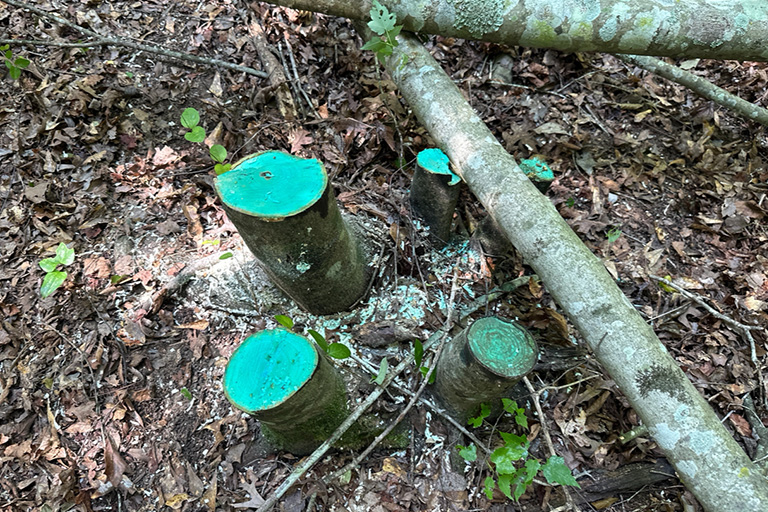
Targeted herbicide applications can be used to manage invasive or undesirable plant species that reduce habitat quality or limit regeneration of beneficial vegetation.
These treatments are carefully planned to:
- Support native plant communities
- Improve wildlife forage and cover
- Align with environmental and regulatory standards
Related Service: Species-Specific Habitat Evaluation & Management
How Forest Stand Improvement Supports Integrated Land Management
Forest Stand Improvement for Wildlife is most effective when integrated with other land management services. We coordinate FSI with:
- Forest Management Planning for long-term alignment
- Population Surveys & Assessments to measure wildlife response
- Reforestation where regeneration is needed
- Cost Share Program Administration to support eligible conservation practices with government funding assistance
This integrated approach ensures habitat improvements are sustainable, measurable, and financially feasible.
Frequently Asked Questions
Is Forest Stand Improvement only for wildlife-focused properties?
Is Forest Stand Improvement only for wildlife-focused properties?
Will FSI negatively impact my timber value?
When properly planned, FSI can improve long-term timber quality by reducing competition and improving stand structure.
How do you determine which FSI practices are appropriate?
Recommendations are based on property conditions, landowner objectives, forest health data, and wildlife habitat needs.
Can FSI practices qualify for cost-share funding?
Yes. Many FSI practices are eligible under federal and state conservation cost-share programs.
How long does it take to see results from FSI?
Some benefits, such as increased understory growth, can be seen within one growing season. Habitat improvements continue to develop over time.
Improve Habitat with Purposeful Management
Forest Stand Improvement for Wildlife is a powerful tool for enhancing habitat quality, supporting biodiversity, and improving the overall condition and appearance of your timberland. Nexus Land & Timber Solutions delivers science-based, goal-driven FSI strategies that produce meaningful, long-term results